
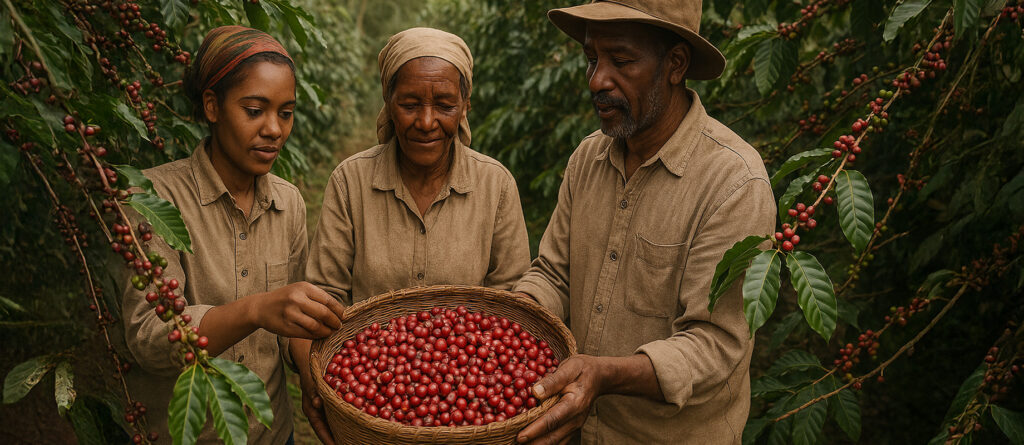
In addition to processing high-quality coffees, Testi Specialty Coffee also contributes to community wellbeing. In Sidamo, they have helped build schools for local children, supported a water project to make clean water accessible and have helped connect homes to the electricity grid.
Details :
- Coffee Grade: Gr. 1 Farm/Coop/
- Station: Ayla washing station
- Varietal: JARC 74110, JARC 74158
- Processing: Fully washed
- Altitude: 1,950 to 2,000 meters above sea level
- Owner: 800 farmers delivering to Ayla station
- Subregion/Town: Shantawene
- Region: Sidamo Farm
- Size: 0.5 hectares on average
- Bag Size: 60kg GrainPro
- Harvest Months:Low elevations: October – December | High Elevations: November – January
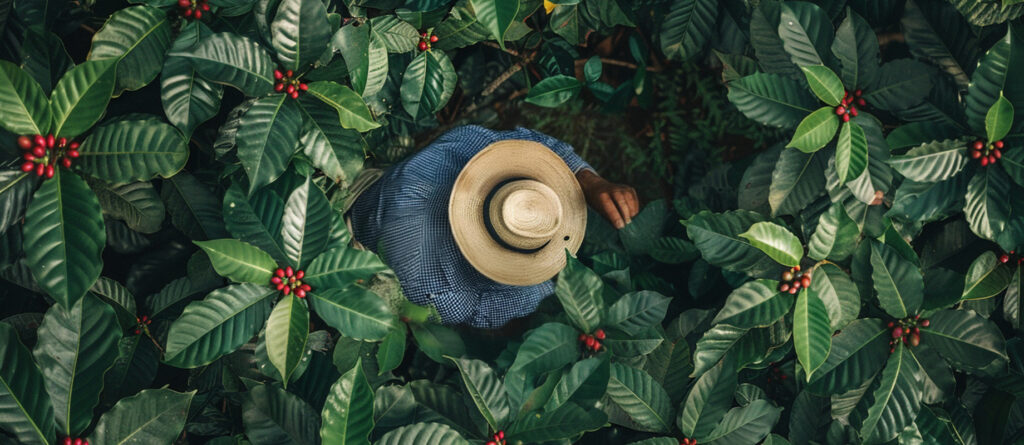
Faysel Abdosh established Ayla washing station in 2018. He named the station after his niece. Faysel’s company, Testi Specialty Coffee, has several stations in Guji. Ayla is Testi’s first station in Sidamo. About 800 farmers contribute cherry to the station. They cultivate coffee at high altitudes of 1,950 to 2,000 meters above sea level on small plots about 0.5 hectares on average. In addition to buying cherry, Testi Specialty Coffee also contributes to community wellbeing. In Sidamo, they have helped build schools for local children, supported a water project to make clean water accessible and have helped connect homes to the electricity grid.
Ethiopia Grade 1 :
Ethiopia Grade 1 Grades in Ethiopia depend on visual inspection for defects and on cup quality. Grade 1 is considered the highest quality coffee. Grade 1 and 2 are considered specialty coffee, grades 3-9 are classified as commercial coffee. Grade 1 is free of cup faults and taints and has zero quakers.
Harvest & Post Harvest :
Harvest & Post-Harvest Farmers selectively handpick ripe, red cherry and deliver it to Ayla station. Since farms are small, most labor is done by the family. At the station, cherry is visually inspected and any damaged or underripe cherry is removed. Cherry is pulped and fermented in a fermentation tank for 36 to 48 hours. Following fermentation, parchment is washed in clean water and laid to dry on raised beds. Parchment is raked frequently to ensure even drying.
Coffee In Ethiopia :
While Ethiopia is famous as coffee’s birthplace, today it remains a specialty coffee industry darling for its incredible variety of flavors. While full traceability has been difficult in recent history, new regulations have made direct purchasing possible. We’re partnering directly with farmers to help them produce top quality specialty lots that are now completely traceable, adding value for farmers and roasters, alike. The exceptional quality of Ethiopian coffee is due to a combination of factors. The genetic diversity of coffee varieties means that we find a diversity of flavor, even between (or within) farms with similar growing conditions and processing. In addition to varieties, processing methods also contribute to end quality. The final key ingredients for excellent coffee in Ethiopia are the producing traditions that have created the genetic diversity, processing infrastructure and great coffee we enjoy today. Most producers in Ethiopia are smallholders, and the majority continue to cultivate coffee using traditional methods. As a result, most coffee is grown with no chemical fertilizer or pesticide use. Coffee is almost entirely cultivated, harvested and dried using manual systems.